

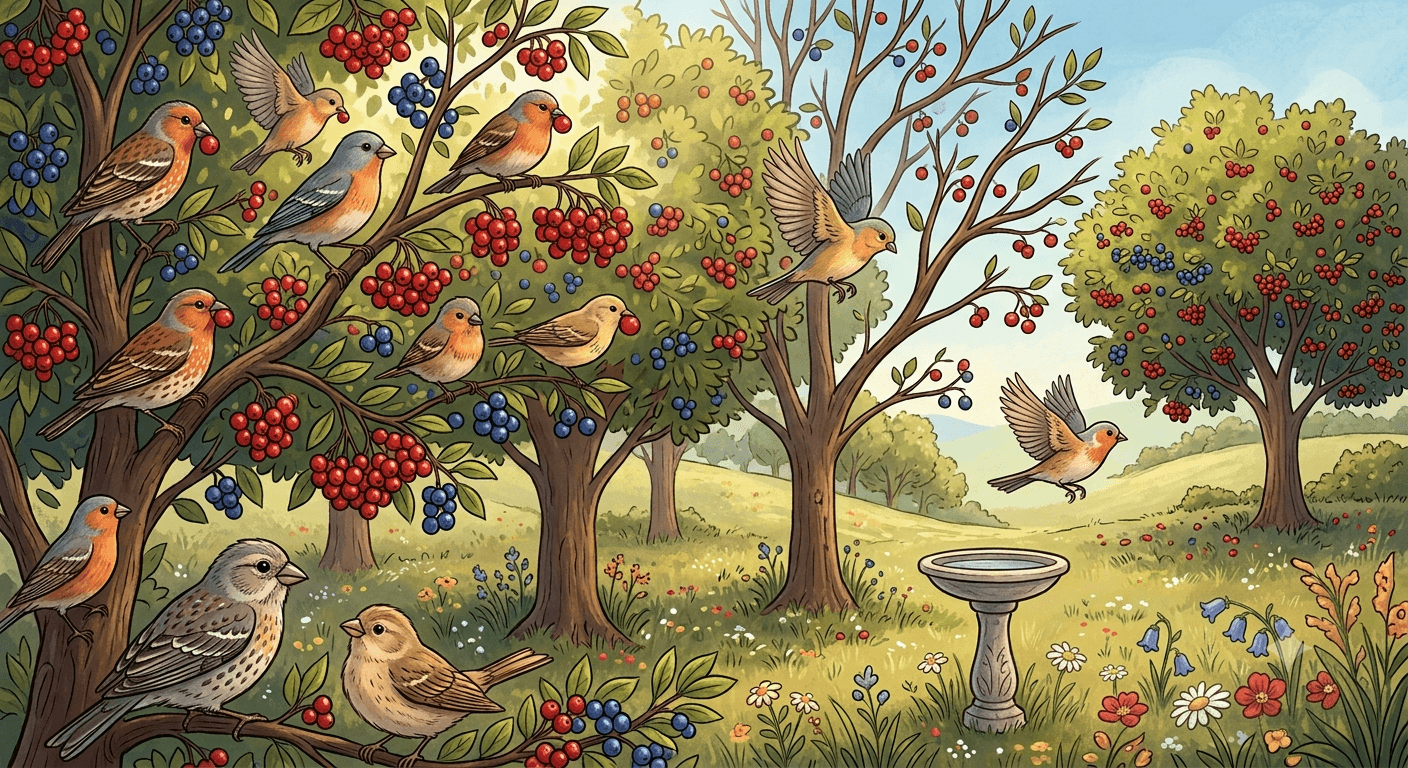
Photo by Google Gemini
The Story of Birds and the Berry Trees | चरा र काफलको रूखको कथा
English | नेपाली
English Version
In a vast, sun-dappled orchard lived a flock of clever finches. Each tree was a world of plenty: clusters of ripe, juicy berries hanging like tiny lanterns. The birds were hungry and smart. They did not wander aimlessly. They had learned, over countless generations, a quiet wisdom. When a finch landed on a fresh tree heavy with fruit, the picking was easy. One peck, two pecks: berries practically fell into its beak. The rate of reward was high. But as time passed, the obvious berries vanished. The bird had to hop farther along the branches, stretch deeper into the leaves, and work harder for each remaining fruit. Some berries were hidden, others smaller or less sweet. The effort per berry rose steadily. The wise finches never stayed until the tree was bare. They never tried to extract the absolute last berry. Instead, they watched something invisible but real: the average return. At first, every minute brought many berries. Later, a whole minute might yield only one or two. When the current tree’s instantaneous rate: the berries gained right now per unit of effort: fell to match (or dip below) the average rate they could expect by flying to a new tree, the birds would flutter away. Not because the tree was empty, but because staying longer would be a losing bet. Better to spend that energy reaching a fresh, abundant tree. Some young, greedy finches ignored this. They stayed on one tree until it was stripped almost clean, fighting for the last few shriveled berries. They grew tired, lost time, and arrived late to the next rich harvest. The patient ones, who left while berries still remained, always seemed fatter and stronger by season’s end.
One spring, a curious young finch named Mira asked the eldest bird, “Why do we leave so many berries behind? We could eat them all if we tried harder.” The old finch chuckled. “Because the tree does not care about your effort, little one. The easy fruit is gone. The remaining ones cost more than they are worth compared to what waits elsewhere. We do not eat until starvation; we eat until the math says move on.”
The Human Reflection
This is the story of birds and tree fruits, but it is also the story of careers and companies. Every job is a berry tree. When you join a new role, the “low-hanging fruit” is everywhere: rapid learning, quick wins, salary growth, exciting projects, recognition. Your return on time and energy is high. But seasons change. Growth slows. The next promotion requires twice the politics and half the reward. The skills you gain per month diminish. The joy per hour worked declines. You start stretching for the hidden, smaller berries. The wise professional, like the wise finch, does not stay until the tree is picked bare (burnout, resentment, or stagnation). They monitor the marginal return: the extra benefit they get from one more month or year versus the average benefit they could get by moving to a new opportunity. This is rooted in a real idea from nature and mathematics: the Marginal Value Theorem (MVT) from optimal foraging theory. It tells us exactly when a forager should leave a patch. Leave when the current rate equals the long-term environmental average (accounting for travel time between patches). Staying longer than that is irrational.
Applied to work:
- Track your “berries per effort”: skills acquired, compensation growth, fulfillment, impact.
- Compare it to the average you could achieve elsewhere (new company, new industry, entrepreneurship, different role).
- Factor in “travel cost” (job search time, learning curve, relocation, risk).
- When the current path’s return drops to (or below) that environmental average, the mathematically sound decision is often to fly.
Leaving while some berries remain is not disloyalty or laziness. It is ecological wisdom. The tree will fruit again next season for someone else. Your life has many trees. The birds who thrive are not the ones who cling longest to one branch. They are the ones who trust the invisible math of abundance and move at the right moment. So the next time you feel the picking getting harder, ask yourself not “Have I eaten every last berry?” but “Is the rate still worth the branch I’m on?” The orchard is wide. Fresh trees await those brave enough to fly.
नेपाली संस्करण (Nepali Version)
एक विशाल, घमाइलो बगैंचामा चतुर भंगेराहरूको एउटा बथान बस्थ्यो। प्रत्येक रूख प्रचुरताको संसार थियो: पाकेका, रसिलो काफलहरू साना लालटिनहरू जस्तै झुन्डिएका थिए। चराहरू भोका र चलाख थिए। तिनीहरू लक्ष्यविहीन रूपमा भौंतारिएनन्। तिनीहरूले अनगिन्ती पुस्ताहरूदेखि एक शान्त बुद्धि सिकेका थिए। जब एउटा भंगेरा फलले भरिएको ताजा रूखमा बस्थ्यो, टिप्न सजिलो हुन्थ्यो। एक ठुँगा, दुई ठुँगा: काफलहरू सजिलै यसको ठुँडमा खस्थे। प्रतिफलको दर उच्च थियो। तर समय बित्दै जाँदा, स्पष्ट देखिने काफलहरू हराए। चराले हाँगाहरूमा टाढासम्म हामफाल्नु पर्थ्यो, पातहरूमा गहिरो गरी तन्किनु पर्थ्यो र प्रत्येक बाँकी फलका लागि कडा मेहनत गर्नुपर्थ्यो। केही काफलहरू लुकेका थिए, अरू साना वा कम गुलिया थिए। प्रति काफलको लागि प्रयास लगातार बढ्दै गयो। बुद्धिमान भंगेराहरू रूख खाली नभएसम्म कहिल्यै बसेनन्। तिनीहरूले अन्तिम काफल निकाल्ने प्रयास कहिल्यै गरेनन्। यसको सट्टा, तिनीहरूले अदृश्य तर वास्तविक कुरा हेरे: औसत प्रतिफल। सुरुमा, प्रत्येक मिनेटले धेरै काफलहरू ल्याउँथ्यो। पछि, एक मिनेटमा एक वा दुई मात्र पाइन्थ्यो। जब वर्तमान रूखको तत्काल दर: प्रति प्रयास एकाइमा अहिले प्राप्त गरिएका काफलहरू: अर्को रूखमा उडेर जान पाउने औसत दरसँग मिल्थ्यो वा तल झर्थ्यो, चराहरू उडेर जान्थे। रूख खाली भएकोले होइन, तर लामो समय बस्नु घाटाको सौदा हुने भएकोले। त्यो ऊर्जा खर्च गरेर ताजा, प्रचुर रूखमा पुग्नु राम्रो थियो। केही युवा, लोभी भंगेराहरूले यसलाई बेवास्ता गरे। तिनीहरू एउटा रूखमा अन्तिम केही सुकेका काफलहरूका लागि लड्दै, रूख सफा नहुन्जेलसम्म बसे। तिनीहरू थाके, समय गुमाए र अर्को समृद्ध बालीमा ढिलो आइपुगे। धैर्यवानहरू, जो काफलहरू बाँकी छँदै निस्किए, मौसमको अन्त्यसम्म सधैं मोटा र बलिया देखिन्थे।
एक वसन्तमा, मीरा नामकी एउटी जिज्ञासु युवा भंगेराले सबैभन्दा जेठो चरालाई सोधिन्, "हामी यति धेरै काफलहरू किन छोड्छौं? यदि हामीले थप मेहनत गर्यौं भने हामी ती सबै खान सक्थ्यौं।" बूढो चरा हाँस्यो। "किनभने रूखलाई तिम्रो मेहनतको वास्ता छैन, सानी नानी। सजिलो फल सकिएको छ। बाँकी फलहरू अन्यत्र पर्खिरहेका कुराहरूको तुलनामा धेरै महँगो पर्न जान्छन्। हामी भोकभोकै मर्ने बेलासम्म खाँदैनौं; हामी तबसम्म खान्छौं जबसम्म गणितले अघि बढ्न भन्छ।"
मानवीय प्रतिबिम्ब
यो चरा र रूखका फलहरूको कथा हो, तर यो क्यारियर र कम्पनीहरूको कथा पनि हो। प्रत्येक जागिर एक काफलको रूख हो। जब तपाईं नयाँ भूमिकामा सामेल हुनुहुन्छ, "सजिलो फल" जताततै हुन्छ: तीव्र सिकाइ, छिटो जित, तलब वृद्धि, रोमाञ्चक परियोजनाहरू, मान्यता। समय र ऊर्जामा तपाईंको प्रतिफल उच्च हुन्छ। तर मौसम परिवर्तन हुन्छ। वृद्धि सुस्त हुन्छ। अर्को पदोन्नतिका लागि दोब्बर राजनीति र आधा प्रतिफल आवश्यक पर्छ। प्रति महिना तपाईंले प्राप्त गर्ने सीपहरू घट्छन्। प्रति घण्टा कामको आनन्द घट्छ। तपाईं लुकेका, साना काफलहरूका लागि तन्किन थाल्नुहुन्छ। बुद्धिमान पेशेवर, बुद्धिमान भंगेरा जस्तै, रूख खाली नभएसम्म (बर्नआउट, आक्रोश, वा स्थिरता) बस्दैन। तिनीहरूले सीमान्त प्रतिफल (marginal return) निगरानी गर्छन्: अर्को अवसरमा सर्दा प्राप्त गर्न सकिने औसत फाइदाको तुलनामा एक महिना वा एक वर्ष काम गर्दा पाउने अतिरिक्त फाइदा। यो प्रकृति र गणितको वास्तविक विचारमा आधारित छ: इष्टतम फरेजिङ सिद्धान्तबाट सीमान्त मूल्य प्रमेय (Marginal Value Theorem)। यसले हामीलाई ठ्याक्कै बताउँछ कि कहिले अगाडि बढ्नु पर्छ। जब हालको दर (प्याचहरू बीचको यात्रा समयलाई ध्यानमा राख्दै) दीर्घकालीन वातावरणीय औसतसँग बराबर हुन्छ, तब छोड्नुहोस्। त्यो भन्दा लामो समय बस्नु तर्कहीन छ।
काममा लागू गर्दा:
- तपाईंको “प्रति प्रयास काफलहरू” ट्र्याक गर्नुहोस्: सीपहरू, क्षतिपूर्ति वृद्धि, पूर्ति, प्रभाव।
- यसलाई तपाईंले अन्यत्र (नयाँ कम्पनी, नयाँ उद्योग, उद्यमशीलता, फरक भूमिका) प्राप्त गर्न सक्ने औसतसँग तुलना गर्नुहोस्।
- "यात्रा लागत" (जागिर खोज्ने समय, सिकाइको वक्र, स्थानान्तरण, जोखिम) लाई कारक मान्नुहोस्।
- जब हालको बाटोको प्रतिफल त्यो वातावरणीय औसतमा वा तल झर्छ, गणितीय रूपमा सही निर्णय अक्सर उड्नु नै हुन्छ।
केही काफलहरू बाँकी रहँदा छोड्नु अविश्वास वा आलस्य होइन। यो पारिस्थितिक बुद्धि हो। अर्को मौसममा रूखले अरू कसैको लागि फेरि फल दिनेछ। तपाईंको जीवनमा धेरै रूखहरू छन्। सफल हुने चराहरू ती होइनन् जो एउटा हाँगामा सबैभन्दा लामो समय टाँसिन्छन्। ती हुन् जसले प्रचुरताको अदृश्य गणितमा विश्वास गर्छन् र सही समयमा सर्छन्। त्यसैले अर्को पटक जब तपाईंलाई टिप्न गाह्रो भएको महसुस हुन्छ, आफैलाई सोध्नुहोस् "के मैले अन्तिम काफलसम्म खाएको छु?" भन्दा पनि "के हालको दर म बसिरहेको हाँगाको लागि सार्थक छ?" बगैंचा विशाल छ। उड्न पर्याप्त साहसीहरूका लागि ताजा रूखहरू पर्खिरहेका छन्।